Please visit the site again using one of the following browsers.

Opera

Chromium

Safari

Firefox
The idea of establishing a career in Europe stands out not only with the expectation of higher income, but also with long-term life plans. Legal solutions developed specifically for qualified professional groups make this process more accessible. One of the concepts most encountered by professionals who want to work in European Union countries is the EU Blue Card system. This structure provides a balanced framework for both employment needs and migration policies.
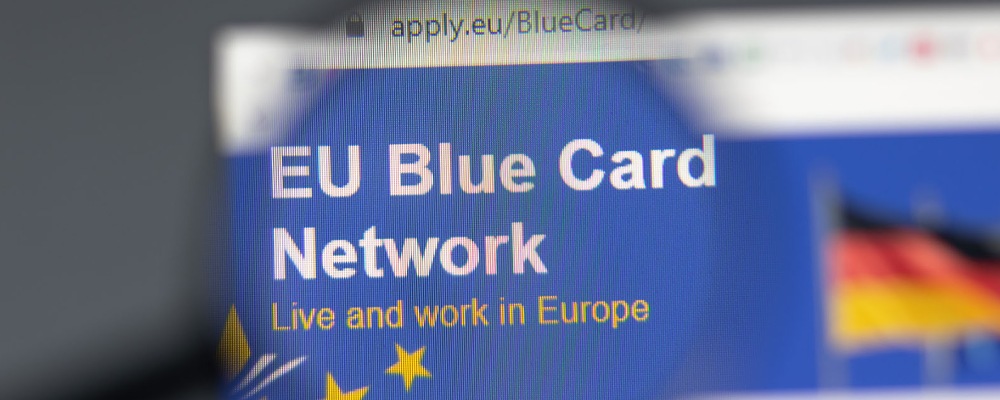
This system, created by the European Union, allows highly qualified employees to work legally in member countries. The main objective is to close the workforce gap in areas requiring expertise and attract talented professionals to Europe. Thanks to this card, the work permit is presented together with the right of residence, and the process proceeds under a single structure.
What is the EU Blue Card? The answer to his question is not limited to just a work permit. Cardholders may gain the right to apply for permanent residence at the end of the specified period. Family reunification processes also go faster, which is an important advantage for those who plan long-term.
The rights offered by the system may vary according to the legislation of the country of application. Despite this, the main benefit faced by those who are looking for what is the EU Blue Card in the general framework is a legal and secure working model in Europe. This structure supports permanent career goals rather than temporary solutions.
It happens that the Blue Card is not only a document, but also a career strategy. Understanding the logic of the process is of paramount importance for those seeking professional stability in Europe.
This card is offered to individuals who meet certain professional criteria. Elements such as academic background, professional experience and employment contract play a fundamental role in the evaluation process. Professionals working in the fields of engineering, informatics, health and science in particular are at the forefront.
Who is given the EU Blue Card? Although the question is often thought to be reduced to a single criterion, the assessment is multidimensional. Just having a diploma is not enough. It is also expected that the received offer will include a salary above the national average.
Below are the key profiles that stand out for application:
● University graduates and professionals specialized in the field
● Those who receive a formal job offer from a European-based employer
● Contract holders who meet the established salary threshold
● Qualified persons working in technical, academic or scientific fields
● Experts who can document their experience
The above criteria provide a practical framework for the question of who is awarded the EU Blue Card. An individual assessment of each application also shows the flexible structure of the system.
The detail that stands out under this heading is that the card is open not only to a specific group, but to candidates who can really offer qualifications. This situation directly affects the nature of applications.
There are some basic requirements that must be met before proceeding to the application process. These requirements are intended to measure both the qualification of the candidate and the suitability of the job offer. Documents must be clear, verifiable and of an official nature.
What are the EU Blue Card application requirements? The question is often complicated. In fact, the process is shaped around a few basic requirements. Diploma equivalency, employment contract and salary criterion are at the top of these.
It is possible that the conditions may vary slightly by country. Despite this, there is a common ground in the information sought by the EU Blue Card application requirements. The candidate is expected to make a real contribution to the European job market.
The purpose of these requirements is not to complicate the process, but to create a sustainable employment model. With proper preparation, the application process becomes more predictable.
The application is carried out through the relevant immigration offices or consulates in most countries. The first step is the formal receipt of the employment contract. Then the application file is prepared with the necessary documents.
How to apply for an EU Blue Card? Although the answer to the question varies from country to country, the basic steps are similar. Although online application systems have become widespread, in-person processes continue in some countries. The evaluation period usually takes several months.
When the application is approved, the work and residence permit are defined together. At this stage, the EU Blue Card application is considered complete and the person can legally start working. The completeness of the documentation is critical for the orderly progress of the process.
Moving and financial preparations are also on the agenda when it comes to this stage. Spending the first period in Europe on a planned basis greatly facilitates the adaptation process.
The Blue Card system is valid in most of the countries that are members of the European Union. Each country determines the details of implementation according to its internal legislation. For this reason, working conditions, salary thresholds and sector priorities may vary.
In the general framework, the countries that can be worked with the EU Blue Card are made up of economies that need a qualified workforce. Countries such as Germany, the Netherlands, France are among the centers where applications are concentrated. Each offers different advantages.
When choosing a country, not only the job offer should be considered, but also the cost of living and social benefits. The answer to the question of how to get an EU Blue Card is often directly linked to these strategic preferences.
At this point, choosing the right country becomes decisive for the sustainability of the career plan. Long-term goals take on more importance than short-term gains.
For people starting work in Europe, one of the first steps is to properly set up the salary flow and day-to-day financial management. When moving to a new country, the process of opening a bank account can take time, and needs arise, such as sending money to the family or getting support from Turkey. At this point, fast, low-cost money transfer options make life easier.
In addition to offering the possibility of transferring money to Europe for a fixed €1, UPTION helps employees in Europe establish financial order by offering the possibility to send money 24/7 with appropriate transaction fees to 176 countries.
The free transfer of funds between UPTION accounts makes it easy to share financial support with family members living in different cities or countries.
The UPTION Card for daily expenses can be used for physical and online payments all over the world. Expenses can be made in foreign currency by switching between TL, USD or EUR accounts that can be opened instantly at the time of membership for free.
For those who want to receive salary payments, send money to Turkey or manage international transfers from one app while starting a new career in Europe, UPTION offers a secure and practical financial solution.